As I write, I have just finished screening FOR SALMA the second time since this summer. Today is the broadcast premiere of the film on PBS-Frontline USA and Channel 4 internationally. My film review: FOR SAMA Bioethics, Humanitarian Law and Withdrawal of Medical was was first published on November 18, 2019, byBioethics.net "Where the World Finds Bioethics" and I ask you to read it at that site. But after today's viewing, I had additional thoughts.
With her co-director Edward Watts, Filmmaker, journalist, and mother, Waad Al-Kateab has created an enduring document of war--particularly the World War, referred to as the Syrian Civil War--currently being fought at the expense of the regular people of Syria and it's adjacent regions. Waad Al-Kateab has distinguished herself as a cinematographer, director, and journalist. She has told a uniquely womanistic, family-centered story wrapped in a sublime but hard-hitting war documentary. Her work moves the viewer to compassion--followed quickly by anger and responsibility which may yield a change in the depicted circumstances.
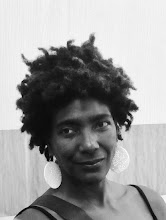
Director Waad Al-Kateab and her husband featured in FOR SAMA Hamza Al-Kateab
With the film FOR SAMA, Waad Al-Kateab brings the twenty-first century to a cannon of conflict photographers/journalists the perspective of a woman, and one raised in Islamic culture at that. She joins the ranks of the best of Concerned Photographers and Journalists. I list them here to urge readers to seek out their works. Among Waad Al-Kateab's ilk are: Nick Ut, Margaret Bourke-White, Philip Jones-Griffiths, Henri Cartier Bresson,Moises Saman, João Silva, Tim Hetherington, Don McCullin, Robert Capa and the one who inspired me to write the novel, Chasing Mercury, learn photography and film -- and honestly even to practice medicine, William Eugene Smith. Concerned photographers and journalists not only document but move the observer to compassion and action.
Your viewership can determine the breadth and depth of FOR SAMA’s influence. FOR SAMA’s WORLD BROADCAST PREMIERE was Tuesday. November 19, 2019. However, you may see it in rebroadcast and help expand the film through. Check your local PBS Station to view the FRONTLINE EPISODE: HERE
A PRIVATE WAR had its USA premiere the opening night of the Mill Valley Film Festival (MVFF42) October 4, 2018. The screening was prior to Time Magazine having designated “The Guardians of Truth,” as its 2018 person of the year— and before the targeted killing of journalist Jamal Khashoggi in the Turkish Saudi Arabian embassy. Acclaimed documentarian Director Mathew Heineman’s supposed biopic focuses on the life, career and death of US born war correspondent for the London Sunday Times, Marie Colvin. Surprisingly, Heineman has chosen to re-tool his award winning considerable documentary skills to create this, his first narrative film. A PRIVATE WAR is many things, a Hollywood mirror biopic not being among them. Instead, this screen work is a gift of reality wrapped in art.
Marie Colvin was killed in Homs, Syria, in 2012— during the second year of the Syrian civil war. This war still continues at this writing and is key to the undeclared World War raging in the Middle East with players from multiple nations beyond the region. Dying along with Marie was the acclaimed French freelance photojournalist Rémi Ochlik. For nearly thirty years Colvin had covered the “Middle Eastern War beat.” Her reports uniquely defined the inhumanity of war while she herself role-modeled a hard boiled compassion, accuracy and truth. She focused on the rights of civilians trapped in the cross-fires of hell on earth. An autopsy conducted in Damascus by the Syrian government concluded Marie Colvin was killed by an “improvised explosive device filled with nails.” These are the facts but there is more to the film.
Heineman’s film begins with the image of a decimated house, in the demolished city of Homs where thousands and Colvin died. It is so haunting that the viewer should be forewarned that it will wrench you from your sleep months after the screening. You will scramble to play catch up. The film asks the viewer to choose… “What side are you on?” Weeks later you will try to understand the history of how the wars inChechnya, Kosovo, Sierra Leone, Zimbabwe, Iran Libya Sri Lanka, East Timor and Syria became part of the same war — the war were the most vulnerable, the noncombatants, are used as cannon fodder over near a century.
Photojournalist Paul Conroy was injured in the attack that took Marie and Remi. He survived to provide context to his colleagues’ final hours. Crazy with purpose, Colvin had used her satellite phone to speak—one last time—the truth of the devastation of the civilian population of Syria. Six years later, in 2018 a Syrian Forces defectors testimony was unsealed by a USA court. The document presented evidence that the forces of Assad, the president of Syria, locked into the slain Colvin’s phone transmission to target and kill her.
It is a visually gritty, granular polluted air Colvin breaths. Visually, A PRIVATE WAR ends with that same decimated ruin in Homs where it begins. So why is a film whose story begins and ends in the same place worth telling in yet another way? It is, after all, a story that has been told in documentary film, magazine articles and in books elsewhere. Importantly, much of the script is adapted from an interview by Marie Brenner with Marie in Vanity Fair magazine. That is-- the perspective of the film derives from the war journalist herself telling the world parts of her own story. Therein lay the value.
Screenwriter Arash Amel’s work was challenging because it is not from the perspective of an onlooker. We know what Colvin said —because she said it. But how do you show the vulnerability and sometimes confusion she felt? If the purpose of the film was to leave her feeling, not chronological data, the work has succeeded. Context takes a back seat to the main characters reflection of her times at a given moment.
“Biopic’ is a misnomer — A PRIVATE WAR is a memoir. You jump geography and timeframes. Strangers appear without announcement of names or titles — as they do in one’s own memory. If we can’t tell why the scene is there by Pikes performance — shame on us. The burden of Heineman’s complex film is absolutely carried by the power of Academy Award® nominee Rosamund Pike’s portrayal of Marie Colvin. Pike channels Kate Hepburn, in a role the silver screen actress never played. The performance is no less astounding for the uncanny likeness to miles of available film and sound footage of the slain reporter. Heineman allows Pike to express the pain and suffering in Colvin’s aging battered body, in her womanhood rattled love, and journalistic commitment to truth.
But all is not dour. Pike’s Colvin masterfully conveys the physical comedy of facial expression as an irascibility when the character jokes. This heightens the contrast when actor also brings an exquisite portrayal of a body and mind racked with tragedy. The accuracy of the performance even includes the slight imbalance of gait in the mono-optic, eye patch wearing Colvin—whose distant traumatic brain injury had resulted in a lost dominant eye. By allowing Pike to dive deeply into the body of the woman she portrays, Heineman delivers the character’s inner voice. You can’t write or tell this stuff in words.
A PRIVATE WAR is not a film for the faint, or even exhausted of heart. The actor’s task was to flip the character’s insides to the outside. Even laughing, Pike’s Colvin is always only a tear drop away from being left naked and exposed to the devastations of war, post traumatic stress, and survivor guilt. The audience receives the same, as if from a ricocheting bullet.
For more, see Part II of A PRIVATE WAR: Bioethics meets Guardians of Truth at http://www.bioethicsscreenreflections.com
THE WIFE PART I: Bioethics, Breaking Oaths, and Stockholm Syndrome
This week I saw two films that were about the theft of creative property. One of the films was THE WIFE and the other THE KINDERGARTEN TEACHER. Peculiarly, in each case the stealing is linked to a profound purgatorial love for another character. This is not the way one typically thinks of plagiarism.
THE WIFE, stars Glenn Close and Johnathan Pryce playing a long married couple, Joan and Joe Castleman. They are thrown into a circumstance that brings on a full throttle life review , the type that people need as they move into their later years — a great adventure backward. The intimacy of those years does not wain but has an intensity that leaves the viewer waiting for the other shoe to drop.
There is a first grandchild on the way. Their twenty-something son seeks his own creative path from beneath the shadow of his famous literary giant of a father and— we think— shrinking personality of his mother. This is a story of two writers whose lives, children and work are so immeshed that it has allowed them to sublimate the truth that they are neither one intellect nor a single spirit.
At first, the soft beauty of a New England landscape in early winter lures us into the family romance of the film couples’ enduring love affair. Then, the stark early winter of Stockholm, with its block architecture and grid format streets is quickly unsettling. The dialog written by Jane Anderson and based on the novel The Wife by Meg Wolitzer is delivered like bread crumbs trailing to the climax not of a melodrama but a riveting suspense.
Close’s portrayal of Joan, the wife, is magnificent in its simplicity. The actress creates a woman who keeps her cards so near her chest that she seems to have forgotten they are there. But, the audience hunches forward in anticipation. Joan’s stoicism is contrasted with the eccentricities of her husband’s faded sexiness, as he pushes 80, while still trying to philander. Clearly, director Bjorn Runge’s bent toward mystery— and veteran stars capable of taking direction so well they reach beyond the stratosphere— brings this “little movie” into the arena of the grande—maybe even the grandest.
And for Bioethicists? It’s an exploration of the role of life review in relationships and health. The simplicity of copyright handling intellectual property dissolves into a bioethical concern momentous as the complexities of creative threads which spawn a finished art work. The film is a teasing apart of strands. It is dizzying enough to drive one to split the baby in half to redistribute its parts.
Just when you can barely tolerate the high pitched squill of this marriage between Joan and Joe a moment longer, the darn string ruptures. We are left wondering how and why people get themselves tangled in such clearly toxic webs. Oddly, I found the answer to that question while considering the film the KINDERGARTEN TEACHER. That is Part II of this exchange — on Bioethics, Breaking Oaths and Stockholm Syndrome.